Key Elements of an Effective Website
1. Appearance2. Content
3. Functionality
4. Website Usability
5. Search Engine Optimization
Bias information (Example)
Bias information(Example)Global warming
See Examples of Bias in Wikipedia: Global warming
Bias information (Example)
Bias information(Example)1. Google
Google was founded by Larry Page and Sergey Brin in the year 1996.Google today has sky as its limit and all of us know that even an illiterate person know what google is.Google’s headquarters are located at 1600 Amphitheatre Parkway, Mountain View, California,USA.Today,Google is not only a search engine it is far more than that today google has now came up as a company and it serves the whole world.
2. Yahoo
Yahoo was founded by Jerry Yang and David Filo in the year 1994 but till 1995 Yahoo was called Jerry’s Guide to the World Wide Web but later in 1995 it was renamed as yahoo!.Yahoo today gives equal competition to Google and other big Internet boons.Yahoo’s headquarter are located at 701 First Ave. Sunnyvale, California, United States.
3. Baidu
Baidu is a Chinese company which serves China and Japan only but due to its high traffic it is ranked 6th on Alexa. Baidu offers search in Chinese only. Baidu’s headquarter are located at Beijing, China. Baidu was founded by Robin Li and Eric Xu.
4. MSN
Though Msn now has been converted into bing but it was a great search engine before that. MSN is a product of Microsoft and MSN is ranked 11 on Alexa.MSN serves the whole world. MSN is a portal website which makes MSN a good competitor of other search engines. MSN was launched by Microsoft on August 24, 1995.
5. Bing
Bing has a really nice full form which is “Bing is not Google”.Although this is not the official full form of Bing, Bing itself is a word. Bing is a product of Microsoft, Microsoft converted msn into bing. Bing’s rank on Alexa is 24 which is really nice.Bing has spent only a year in the search engine market but it has prospered a lot.Bing was launched on June 3, 2009.
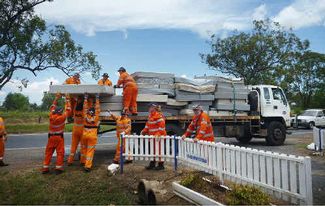
There are still plenty of ordinary Australians desperate to help, but not sure how to . However, it is still very difficult for individuals, many of whom live in or near flood affected areas, to find out the best way they can help and support their local community.
if you have muscle or manpower to volunteer you can register with Volunteering QLD who are coordinating volunteer efforts in Queensland, but there are plenty of other ways that you can provide practical, hands on support for flood victims. It is often the simple, seemingly little things, that can make the biggest difference in supporting those affected by floods.
An innovative new service called HelpOut, has been established specifically to connect those people who need help with those who are able to provide help. This service allows individuals living in or near flood affected communities, to list the types of help they can offer. Perhaps more importantly though, HelpOut also allows those people directly affected by flood, many of whom are in desperate need of assistance, to specify exactly the type of assistance that they need.
HelpOut allows people to search by location (town, suburb or postcode), and presents offers and calls for help on a map – so it is very easy to see what help is available (or need) in specific areas.
World famous as arguably the best preserved and most extensive Roman city in the world. Originally a Phoenician settlement probably founded in the 6th century BC under the aegis of Carthage, Leptis Magna became a great metropolis under the Romans, particularly during the reign of Septimus Severus (193-211 AD), who was born in the city. Following the end of the Severan dynasty, with the assassination of Alexander Severus in the year 235 AD, the city fell into decline although a period of rejuvenation occurred under Diocletian (284-305 AD) and Constantine (306-337 AD). When the Vandals conquered Tripolitania in the mid-5th century AD, it fell upon the Emperor Justinian to reclaim the land for Byzantium, which he achieved. In the 7th century, Tripolitania was conquered by the Arabs, and Leptis Magna never revisited its former glory.
Among the many sites of interest at Leptis Magna are the Severan Arch, the Palaestra or Sports Ground, the Nymphaeum, the Hadrianic Baths, the Colonnaded Street, the Severan Forum, the Severan Basilica, the Theatre, the Harbour, the Circus, the Temple of Liber Pater, the Temple of Rome and Augustus, the Arch of Trajan, the Arch of Tiberius and the Market.
The New York Times' Opinion pages welcomed a new columnist today, and he's ... a food writer. We can save the discussion for what this means for our national dialogue on food for later; right now, I want to point you to Mark Bittman and his inaugural column, titled no less ambitiously than "A Food Manifesto for the Future." It's a nine-point plan to save us from our fast, cheap and out-of-control eating selves, and he might be the perfect person to write it.
A few years ago, Bittman was in a TV commercial. Goofy words flashed on the screen: "BIG DEALFOOD WRITER" and under them, the man who normally exudes an utterly casual confidence looked nonplussed. They had him leaning in a weird way, a way that was supposed to suggest a level of informality, but only made him look, unfortunately, like he couldn't stand up straight while he was singing the praises of the product. What I'm saying is that the man who spent a dozen years writing a wildly popular column called "The Minimalist" is visibly uncomfortable with bull. His great talent is to make good cooking and good food seem totally natural, totally simple and totally understandable. ("The Minimalist" is still my girlfriend's all-time favorite food column. Ahem.) But I don't begrudge him the success; no one else I can think of can pull off a newspaper story -- a newspaper story, not a book -- called "101 meals ready in 10 minutes" and have it make sense, let alone read well and taste great. True to the column's name, he boils down cooking to its minimal essentials. He reduces without dumbing down.
And now he takes that sensibility to talking about the absurdly complicated world of food production and policy. Today's piece doesn't present startlingly original analysis and insight, but rather lays out pretty much everything that food policy geeks have been talking about for years ... in 818 eminently sensible words. Like this:
Break up the U.S. Department of Agriculture and empower the Food and Drug Administration. Currently, the U.S.D.A. counts among its missions both expanding markets for agricultural products (like corn and soy!) and providing nutrition education. These goals are at odds with each other; you can’t sell garbage while telling people not to eat it, and we need an agency devoted to encouraging sane eating. Meanwhile, the F.D.A. must be given expanded powers to ensure the safety of our food supply. (Food-related deaths are far more common than those resulting from terrorism, yet the F.D.A.’s budget is about one-fifteenth that of Homeland Security.)
Source: http://www.salon.com/food/francis_lam/2011/02/02/mark_bittman_times_opinion_column
Yolladee Haruthaiwichitchoke < yok> 54009337